Create a highly usable API by following
Lifecycle of an API
The API lifecycle is the series of steps that teams must take in order to successfully design, develop, deploy, and consume APIs. Teams that follow a clearly defined API lifecycle are more productive and better equipped to deliver a high-quality API
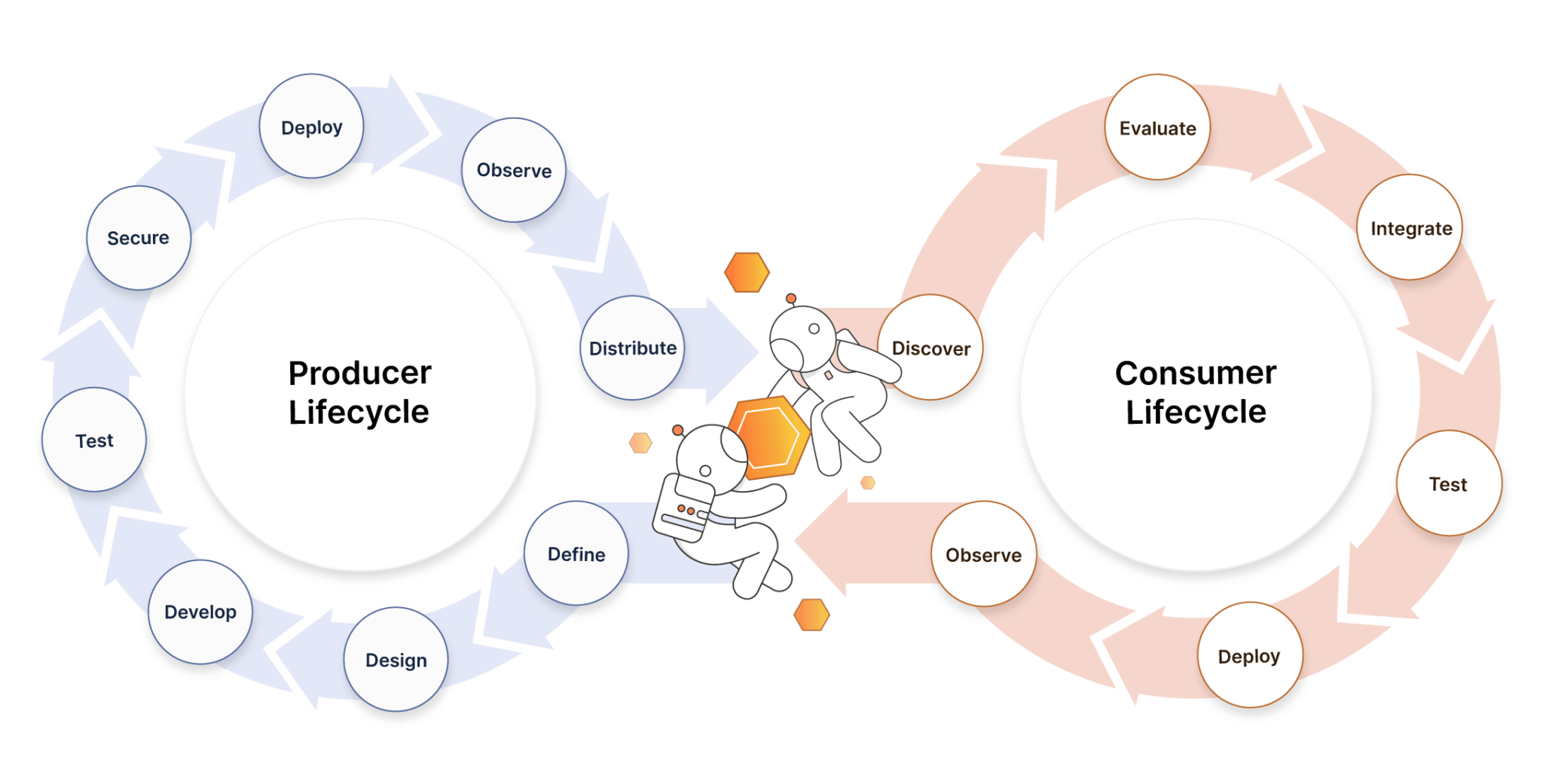
Stages in an API Producer Lifecycle
These are the stages that the API provider or producer goes through to create and maintain an API. By understanding these stages and focusing on the benefits each offers, you can build and manage APIs that deliver real value and drive business success.
Defining the APIs purpose, target audience (developers), business goals (revenue, integration), scope of functionality, and initial success metrics. This includes deciding on API style (REST, GraphQL, etc.), governance models, and security considerations (authentication, authorization).
Translating the strategy into a detailed API design. This includes defining endpoints, request/response formats (JSON, XML), data models, error handling, versioning strategy, and documentation plan. Often, a formal API Specification (e.g., OpenAPI/Swagger) is created.
The actual coding of the API. Developers translate the API specification into functional code, including backend logic, data access, and security implementations. Testing begins at this stage (unit tests, integration tests).
Thorough testing to ensure the API meets the defined specifications and handles various scenarios. This includes functional testing, performance testing (load, stress), security testing, and usability testing (if applicable).
Offer clear instructions on how to download the purchased templates and install them on various website platforms or content management systems.
Making the API available to developers. This involves deploying the API to a production environment, configuring access controls, publishing documentation, and announcing the APIs availability.
Ongoing monitoring of API performance, availability, and security. This includes tracking metrics (latency, error rates, usage), identifying and resolving issues, and responding to security incidents.
Publishing the API to a wider audience. This includes marketing the API, providing developer support, and engaging with the developer community. This stage may also involve creating SDKs, code samples, and other resources to help developers use the API effectively.
Stages in an API Consumer Lifecycle
These are the stages that the API consumer or user goes through to develop and consume an API. By understanding these stages, developers can navigate the API ecosystem more effectively, choose the right tools, and build robust applications
Developers search for APIs that solve a specific need or functionality gap. They evaluate API providers based on documentation, pricing, features, reputation, and ease of use.
Developers experiment with the API using sample requests, interactive documentation (e.g., Swagger UI), and tutorials. They test different endpoints and data models to understand how the API works.
Developers integrate the API into their applications. This involves writing code to make API requests, handle responses, and map data to their applications data models.
Developers test the integration to ensure it works as expected. This includes functional testing, performance testing, and error handling. They may also use tools like Postman or cURL for manual testing.
The application is deployed to production, and the API is used in real-world scenarios. Developers monitor the applications performance and user feedback to identify any issues or improvements.
The application actively uses the API to provide functionality to users. Developers monitor API usage to track performance, identify potential issues, and ensure compliance with rate limits.